Clipboards, Calipers and the Paper Trail: Inside a Club Racing Scrutineering Bay

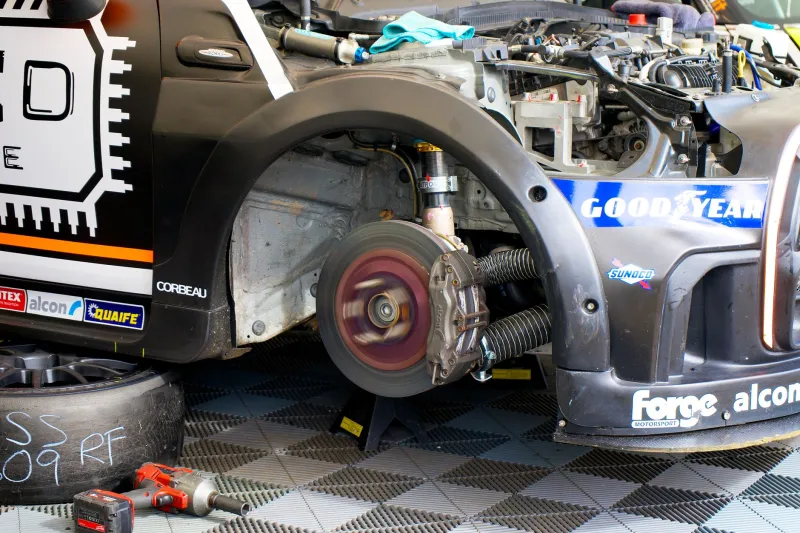
Photo: club racing scrutineer inspecting race car in UK paddock, via i.pinimg.com
At 7.15 on a damp Saturday morning, the paddock at a British club meeting has already split into two tribes. One is wrestling a car off a trailer, hunting for a torque wrench and trying to remember where the transponder lives. The other is standing in a scrutineering queue with a folder, a coffee and the quiet confidence of someone who has done this before.
Scrutineering can look like the least glamorous part of motorsport. It is not. It is the point where safety, identity and eligibility meet, and where a weekend can be won or lost before anyone has turned a wheel in anger. The trick is to treat it as part of the racing craft rather than an administrative ambush.
The Bay Is Not an MOT Test
A common mistake is to think of scrutineering as a slightly motorsport-shaped MOT. It is not. An MOT checks whether a car is broadly roadworthy. Scrutineering checks whether a competition car is fit to take part in a specific event, under a specific set of regulations, with the right paperwork and the right declared specification.
At a typical club race meeting, the scrutineer will look at safety items first: harnesses, seats, roll protection, fire extinguishers, electrical cut-offs, towing eyes, brake lights, rain lights and the general condition of the car. They will also check that the car in front of them matches the car in the logbook. Chassis number, make, model, colour, cage details and photographs all matter. If the identity of the car is unclear, the conversation gets awkward very quickly.
That safety inspection is only half the story. Eligibility is the other half. A car can be beautifully prepared, beautifully safe and still be in the wrong class, on the wrong tyres, or carrying a modification that the championship does not allow. The scrutineer is not there to validate your engineering choices. They are there to confirm that the car conforms to the rules you have entered under.
The Paper Trail That Actually Matters
For most club racers, the key document is the Motorsport UK Competition Car Logbook. It is the car's passport. It records the basic identity and safety specification, and it should travel with the car to every meeting. Turning up without it is like turning up without your licence: technically possible to resolve, but not the way anyone wants to start the day.
Alongside the logbook sits the championship registration and the class declaration. This is where honest, precise paperwork saves everyone time. If the car runs a 1.8-litre engine, say so. If it has a sequential gearbox, a flat-floor modification, a larger turbo restrictor or a set of tyres that are not the control tyre, declare it. The eligibility scrutineer would rather have a five-minute conversation in the morning than discover a discrepancy after qualifying.
Keep a simple car folder. Logbook, licence, championship registration, class declaration, noise test certificate if required, dyno sheet if the class uses power-to-weight, and photographs of the car's key areas. It sounds fussy. In practice, it turns a stressful queue into a routine.
The Classics That Send Cars Home
Most avoidable scrutineering failures are not exotic. They are small, boring and entirely predictable. Out-of-date harnesses are a perennial favourite. So are fire extinguishers with a lapsed service date, missing towing eyes, loose ballast, damaged rain lights and tyres that do not match the declared class.
Then there are the identity issues. A car with no visible chassis number, a logbook that describes a different colour, or a cage that has been altered without being updated can all trigger a longer conversation. None of these are necessarily fatal, but they cost time. At a one-day meeting, time is the one thing you cannot buy back.
Noise is another quiet killer. A car that passed sound at one circuit may fail at another, especially on a damp morning when the air is heavy. If you are close to the limit, have a plan. A spare silencer insert, a repackable box or a gentle lift on the test revs can be the difference between a useful day and a long drive home.
Eligibility Is a Moving Target
Championship regulations change. Tyres get reassessed, minimum weights are adjusted, restrictors are introduced or removed, and a modification that was accepted last season may need a fresh declaration this season. That is why the Blue Book and the championship technical regulations are not bedtime reading to be skipped. They are the contract you sign when you enter.
A scrutineer cannot be expected to know every nuance of every championship. At many meetings, safety scrutineering and eligibility scrutineering are handled separately, and the eligibility side may be run by the championship itself. If you are unsure whether a modification is legal, ask before the meeting. A written answer from the championship is worth more than a paddock rumour.
Post-session checks also happen. Weight, ride height, tyres, fuel and engine capacity can all be examined after qualifying or racing. If you are running ballast, make sure it is securely mounted, visible and declared. If you are close to a minimum weight, weigh the car with the driver and the required fuel load, not just what you hope it weighs.
Preparing Like You Mean It
Good scrutineering preparation is not about trying to sneak something past anyone. It is about removing doubt. Clean the car. Label the cut-off and extinguisher pull. Torque the ballast bolts. Check the dates on the belts. Bring the folder. Arrive early enough that a missing sticker does not become a missed session.
And be pleasant. Scrutineers are usually volunteers or underpaid enthusiasts who have seen every shortcut, every optimistic declaration and every last-minute panic. A calm, organised competitor gets helped. A defensive one gets a longer inspection.
The bay is not the enemy of the club racer. It is the last clear checkpoint before the track. Treat it properly and it becomes what it should be: a quiet confirmation that the car is safe, the paperwork is straight and the weekend is ready to begin.