Spanners, Spreadsheets and Silence: Inside the UK Club Racing Off-Season

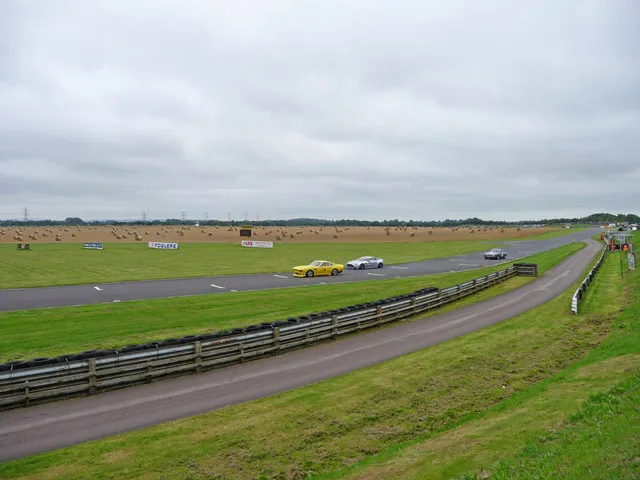
On a damp Tuesday in early November, the paddock at a Midlands circuit is almost silent. The burger van is shut, the scrutineering bay is empty and the only movement comes from a pair of club racers loading a stripped hatchback onto a trailer. This is the off-season — the part of the year when British club motorsport disappears from the headlines and gets on with the work that makes the next campaign possible.
THM Racing spent time with two typical club outfits as they began their winter rebuilds: Bramble Motorsport, a family-run team based in a shared unit in the Midlands, and Kestrel Racing, a smaller operation working out of a rented lock-up in Kent. Neither has a factory budget. Both have a long list of jobs and a finite number of weekends before the 2027 season begins.
The unit at 7am
Bramble Motorsport's unit smells of oil, tea and slightly damp carpet. A Class 2 hatchback sits on axle stands with its front subframe on the floor. Team founder Dave Bramble is already under the bonnet, while his son and a family friend wrestle a gearbox onto a bench.
'People think the season ends and we all go on holiday,' Dave says. 'It's the opposite. This is when you find out what actually broke, what you bodged and what you can afford to replace.'
The car finished the season with a healthy points tally but a worrying vibration. The strip-down revealed a worn driveshaft and a cracked engine mount. Neither was obvious from the driver's seat. Both would have been expensive failures in qualifying.
Stripping back the season
At Kestrel Racing, the approach is more methodical. The car is completely stripped: suspension off, fuel tank drained, wiring loom labelled and photographed. Team owner Priya Shah works as an engineer during the week, and she treats the winter rebuild like a project at work — with a spreadsheet, a parts tracker and a deadline.
'We have three volunteers and one proper mechanic,' she says. 'If we do not plan, we end up buying the same bolt twice and discovering the problem the night before the first race.'
Kestrel's inspections cover crack testing, brake line condition, fuel hose dates and the condition of every bush and bearing. The team also checks the seat belts, the fire extinguisher and the roll cage — safety items that are easy to overlook when the car is running well.
Volunteers, tea and torque wrenches
Club racing runs on volunteer labour. Bramble Motorsport's crew is made up of family, friends and a couple of paying club members who help out in exchange for pit crew experience. Nobody is paid. The reward is a bacon roll, a share of the garage banter and the chance to be part of a team.
That creates its own challenges. Volunteers have jobs, families and other commitments. A rebuild that needs 40 hours a week in a professional shop might take two months in a club unit, squeezed into evenings and weekends. Motivation can dip in January, when the car is in pieces and the first race feels a long way off.
'We try to make it social,' Dave says. 'If it is just work, people stop coming. If there is tea and a bit of a laugh, they come back.'
The parts lottery
Parts supply is the recurring headache. Mainstream consumables — brake pads, filters, fluids — are straightforward. Bespoke components are not. A one-off manifold, a rare gearbox bearing or a set of period-correct wheels can take weeks to source, especially when a specialist is winding down for Christmas or a small supplier is waiting on a batch.
Both teams use the second-hand market, owners' forums and the club paddock's own network. Kestrel has a list of 'wanted' items pinned to the lock-up wall. Bramble Motorsport has a shelf of spares that has been built up over a decade. Neither can afford to buy new everything, so they prioritise safety-critical parts and consumables, then improvise elsewhere.
'You learn to plan around uncertainty,' Priya says. 'If a part is two weeks late, we move on to another job. The car does not care about our schedule.'
Budgets that bite
A club racing season can cost anything from a few thousand pounds to well over £20,000, depending on the championship and the car. The off-season is when the bill for the previous year arrives: engine refresh, gearbox rebuild, new tyres, entry fees for the next campaign and the inevitable replacement of parts that wore out.
Bramble Motorsport budgets by race weekend rather than by month. That makes it easier to see which events are affordable and where the team can save. Kestrel sets a contingency fund and refuses to spend it unless a safety item or a race entry depends on it. Both teams buy tyres strategically, use part-worn sets for testing and resist the temptation to chase a performance upgrade that will not make them faster.
Why the quiet months matter
The off-season is where championships are quietly won and lost. A car that is properly stripped, inspected and rebuilt is less likely to fail in qualifying. A team that has checked its budget can plan the season rather than panic-entry each round. A driver who has spent the winter learning the data and working on fitness arrives sharper.
It is also where the paddock's stories live. The volunteer who drives 200 miles to help fit a gearbox. The supplier who finds a rare part in the back of a workshop. The argument over whether to spend the last £500 on tyres or a new set of brake pads. These are not glamorous headlines, but they are the reality of British club racing.
When the first race weekend of 2027 arrives, the grandstands will look at the grid and see a field of cars. The people who built them will see late nights, borrowed tools and a spreadsheet that somehow balanced. Off-season team news might not sell many tickets, but it is every bit as important as the race-weekend headlines.
THM Racing will be watching when the cars come back out. In the meantime, the paddock is quiet — and the work continues.