Armco, Excess and Empty Wallets: Budgeting for a Track Day Shunt in 2026
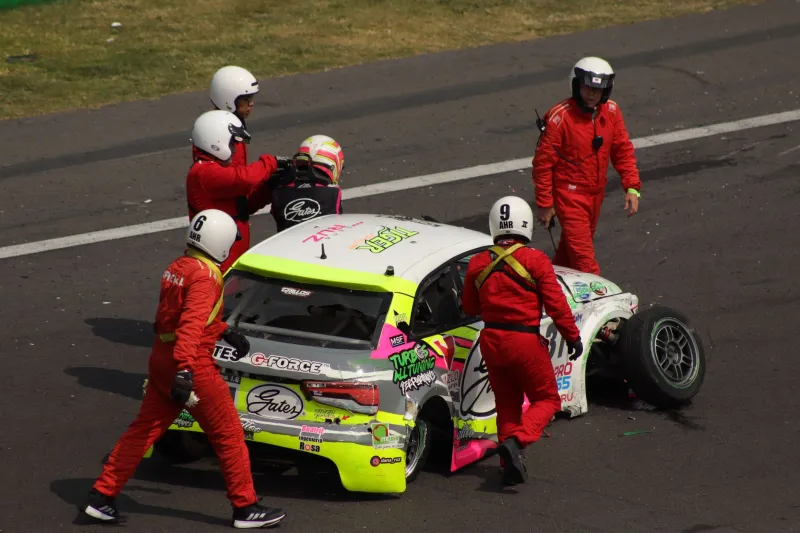
There is a particular silence that follows a track day off. The engine stops, the gravel settles, and for a second everyone in the paddock pretends not to look. Then the recovery truck starts up, the marshal reaches for a clipboard, and the real cost of the incident begins to reveal itself.
Track days are still one of the safest ways to enjoy a car at speed in the UK. But safe is not the same as free. A moment of red mist — a late brake, a missed flag, a silly chase after a mate — can turn a £250 day into a four-figure lesson. Here at THM Racing, we are not here to wag a finger. We are here to make sure the invoice does not arrive as a surprise.
The invoice that starts with a recovery truck
Circuit recovery is not a free breakdown service. If your car ends up in a gravel trap, against a barrier or stranded on the infield, the operator has to get it out without making things worse. That means a marshal-controlled recovery, a flatbed, debris clearance and, sometimes, storage while you work out what happens next.
At UK circuits, recovery and storage charges can easily run into several hundred pounds. If the car is immobile and needs transporting home, that is another line item. Your normal breakdown cover may not treat a closed circuit as a roadside location, so check the small print before you assume the AA or RAC will be collecting you from the paddock.
The first practical step after any incident is simple: ask the operator what you have signed up for. Most track day firms are straightforward about damage terms at sign-on. The trouble is that nobody reads them because everybody is thinking about lap times.
Your road policy is not a track-day safety net
This is where a lot of UK drivers get caught out. A standard road insurance policy is built for the road, not for a circuit. Many policies explicitly exclude motorsport use, and even where track days are not named, wording around racing, competitions, speed tests and use on a racing circuit can leave you exposed.
Some drivers assume their comprehensive cover will follow them through the gates. It usually will not. Track day insurance exists for a reason, and even that is not a magic wand. Premiums vary, excesses can be high, and cover may be limited to your own vehicle rather than circuit damage or third-party liability.
Read the policy schedule before the event. Look for the exclusion list, the excess, and whether track use is covered at all. If you are relying on a road policy, assume the worst until an insurer tells you otherwise in writing. The last place you want to discover a gap is a wet Monday morning with a damaged car on the drive.
The circuit's bill: barriers, fluids and lost time
Barrier damage is the headline cost that catches people out. Armco, tyre walls, marker boards and posts all have to be inspected and repaired. Circuits do not keep a spare mile of barrier in the shed, and they are entitled to recover the cost of putting things right.
A modest contact with the armco can produce a four-figure invoice once labour, replacement sections and lost track time are added. Fluid spills are another quiet cost. Oil, coolant or fuel on the racing line means a cleanup crew, a red flag and a delay for everyone else. Some operators charge for that disruption; others absorb it, but the cost still lands somewhere.
The key is to know the venue's terms before you go out. Ask what happens if you damage a barrier, what the excess is, and whether the circuit expects payment on the day. A few minutes with the paperwork in the signing-on hut is cheaper than a surprise bank transfer later.
The car-shaped hole in your budget
Then there is the car. A low-speed off can bend a wishbone, crack a sump, knock a radiator or damage a wheel. A heavier impact can move chassis rails and turn a cheap track car into a breaker's yard candidate. Even if the car is fixable, the day's entry fee is gone, the track time is gone and your weekend is now a spannering session.
Safety gear matters too. Helmets, harnesses and seats can be damaged in an impact, and they are not cheap to replace. If you are trailering the car, add recovery of the trailer and a tow vehicle to the list. If you are driving home, add the cost of a hire car or a train ticket.
The true budget is not just the repair bill. It is the repair bill plus the lost day plus the time off work plus the favours you call in to get the car home. That is the red mist tax, and it is almost always higher than the crash itself.
Instructor's-eye view: red mist arrives before the crash
Experienced instructors see the warning signs early. Late braking into a corner that was fine on the previous lap. A driver who keeps checking the mirrors for a faster car. Someone who has decided that today is the day to prove a point. The crash is usually a decision made three corners earlier.
Good operators build cooling-off into the day: briefings, sighting laps, session limits and marshals who are not shy about flags. Use them. If you feel the red mist rising, pit. A cup of tea and a debrief is cheaper than a barrier repair. The fastest drivers on a track day are rarely the ones who look like they are fighting the car.
A worst-case budget checklist for 2026
Before your next UK track day, run through this list and be honest with yourself:
- Read your road policy and confirm whether track use is excluded. Assume it is unless proven otherwise.
- Check whether you need separate track day insurance and what the excess actually is.
- Ask the operator for the damage terms, barrier charges and recovery fees.
- Confirm whether your breakdown cover includes circuit recovery. Most do not.
- Keep a crash pot separate from your entry fee. A starter fund of £1,000 to £3,000 is sensible depending on the car and venue.
- Have a plan for getting the car home, including a trailer or a friendly tow.
- Take a cool-down lap, mentally and literally. If you are angry, tired or chasing a mate, come in.
The cheapest crash is the one you never have. The second cheapest is the one you budgeted for before the day began.