Decibel Diplomacy: Surviving Britain's Track Day Sound Police
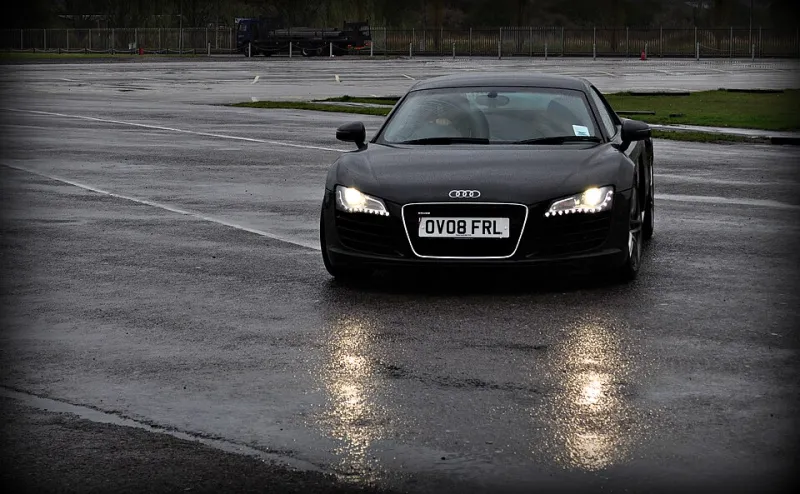
Photo: Tom Bayly from England, CC BY-SA 2.0, via Wikimedia Commons
There is a moment on every UK track day morning that feels less like motorsport and more like a school hearing test. You queue up, someone waves a meter at your exhaust, and the fella in front of you with the straight-piped M3 suddenly looks very nervous. Welcome to the decibel test — the quietest drama in British motorsport.
Noise is the invisible rulebook. It shapes which cars can run, which days sell out and which circuits can keep their neighbours onside. And in 2026, with more powerful road cars arriving with ever-more elaborate exhaust systems, the gap between what a car can do and what a circuit will allow is getting wider.
Why 98dB Is the Magic Number (Sort Of)
You will hear 98dB quoted constantly, and for good reason. It has become the shorthand for a strict track day — particularly at venues with nearby residents who are not shy about reminding councils of their existence. But it is not one national limit. It is a patchwork of local planning conditions, circuit agreements and the organiser's own risk appetite.
Some circuits publish a static limit and a drive-by limit. Others lean harder on drive-by readings taken trackside as you go past. Bedford Autodrome has long been the benchmark for strictness, while several MSV-run venues and Goodwood operate their own combinations of static and drive-by tests. A few circuits will run 'quiet' days at 98dB or lower, and then a handful of unrestricted or higher-limit days that sell out almost instantly.
The practical upshot: you cannot assume your car is fine because it passed somewhere else last summer. The meter, the microphone position, the RPM test point and even the ambient weather can all nudge a reading. A cold exhaust is louder. A hot one can be marginally quieter. A damp morning can change how sound carries. It is not quite witchcraft, but it is close.
What Scrutineering Actually Listens For
Static tests usually ask you to hold a set RPM — often around three-quarters of max, or a figure the organiser specifies — while a meter sits at a set distance and angle from the tailpipe. Drive-by tests are the sneaky ones. You can pass static with room to spare and still trip a trackside meter because the microphone catches you under load, at a particular corner, with the exhaust pointing the wrong way.
That is why intake noise, tyre roar and even a noisy fuel pump can matter. A car that is quiet at idle can be loud at 6,000rpm with the throttle pinned. Modern turbo cars often pass easily at static because the turbo muffles the exhaust note, then get flagged for induction noise or a boomy drone at part throttle.
The Owner's Manual for Staying Under the Ceiling
First, know your car. If it has a factory sports exhaust with a valve, learn how the valve behaves in the mode you plan to use. Some cars are louder in 'Sport' at low revs than they are at full chat. Others have a drone zone at motorway speeds that a trackside mic will pick up perfectly.
Second, do not turn up with a cold engine and expect a friendly reading. Get the car properly warm before the test. Check the exhaust for blowing joints or a tired gasket — a small leak can add a surprising amount of rasp. If you have an aftermarket system, dig out the paperwork and the baffle. Many systems are sold with a removable insert for track use. Use it. Nobody has ever been sent home for being too quiet.
Third, think about where the noise is coming from. A decibel meter does not care whether the sound is exhaust, intake or tyre. If you are marginal, a standard airbox can be worth more than a fancy induction kit. And if your car has a 'quiet start' function, use it in the paddock — marshals notice, and neighbours definitely notice.
Fourth, book smart. If your car is close to the limit, choose a 105dB day rather than a 98dB day. If you are new to a circuit, ring the organiser and ask what their test procedure is. Most are happy to talk. Some will even tell you which days are more forgiving.
Are Electric Track Days the Answer?
On paper, yes. An EV has no exhaust to test, no cold-start rasp and no valve to accidentally leave open. The reality is more nuanced. Electric track days are growing in the UK, and several organisers now run EV-friendly sessions or full electric days. But the cars still make noise — tyre roar, wind, brake squeal and the occasional electrical whine. Drive-by limits still apply, and some circuits are stricter on tyre noise than you might expect.
There is also the small matter of charging, range and consumables. A heavy performance EV can chew through tyres and brakes at a rate that makes a set of track-day pads look like a bargain. Battery temperature management matters. And not every circuit has the charging infrastructure to support a full day of lapping.
So EVs are a realistic alternative for some drivers — particularly those doing short sessions at venues with good charging — but they are not a universal get-out-of-jail card. The noise ceiling is still there. It is just coming from different places.
The Quiet Future
The 98dB ceiling is not going away. If anything, it is likely to get more nuanced, with more circuits monitoring drive-by noise and more organisers offering tiered days. The upside is that quiet days make track driving more sustainable for circuits that sit near towns and villages. The downside is that the bloke with the straight-piped M3 is going to keep having a very nervous morning.
Our advice? Treat the decibel test like scrutineering for your ego. Know your numbers, bring your baffle, warm the car up and do not argue with the meter. The track is far more fun than the queue.