Forty Quid, No Receipt: Shopping a Club Racing Paddock Clear-Out Without Getting Burnt
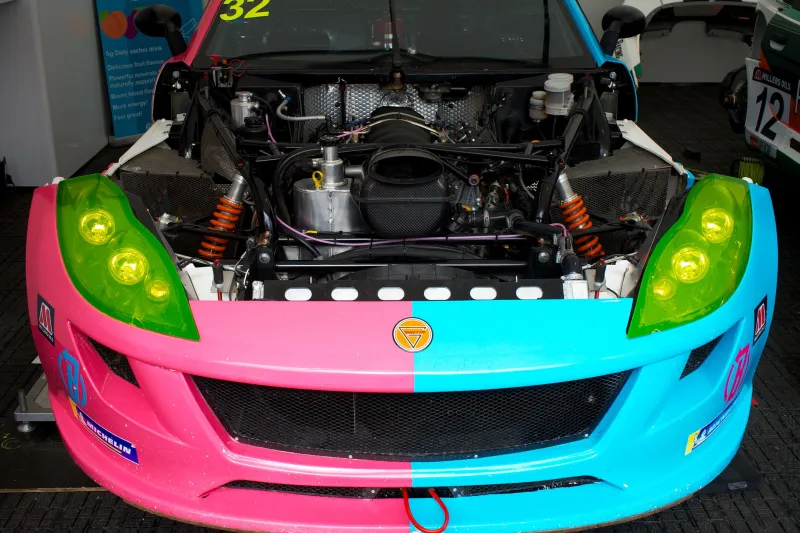
It is 7.12 on a Sunday morning and a man in a fleece is selling a gearbox out of the back of a Volvo estate. There is no price on it, no receipt, and no paperwork — just a handwritten card that reads 'close ratio, LSD, good' and an expression that suggests all three claims are open to negotiation. Welcome to the club racing paddock clear-out: Britain's most honest and least regulated parts market, held in a muddy field behind the scrutineering bay.
Every winter, racers who have sold a car, changed a class or simply run out of shelf space drag their surplus into the daylight. Some of it is genuinely excellent. Some of it is a cracked wheel with a fresh coat of satin black. The trick is telling the two apart before you hand over the cash, because once you have, the seller's phone number tends to stop working.
Nobody Is Your Enemy — But Nobody Is Your Warranty
The first thing to understand is that paddock selling runs on etiquette, not consumer law. A trader at a proper autojumble has a pitch fee and a reputation to protect; a racer clearing out a garage has neither. That is not to say they are dishonest. It is to say that 'sold as seen' means exactly what it says, and your statutory rights are largely theoretical when the vendor is loading a trailer on Sunday afternoon.
So: ask before you lift anything. Do not wander up and start spinning a turbo by hand without a word. If you spot a fault, do not announce it to the assembled crowd like a barrister — mention it quietly, and use it to shape a price rather than to humiliate. Bring cash, bring a torch, and bring a friend who knows more than you do. Arrive early for the good stuff and stay late for the discounts.
Wheels: Where the Kerbs Leave Their Mark
Used race wheels are the classic false economy. A set of four for £200 sounds like a result until you find a hairline crack at a spoke root or a bead seat that has been kissed by a kerb at Cadwell. Paint is a brilliant liar: a fresh rattle-can finish can hide weld repairs, gouges and a wobble that only shows up at 90mph.
Check the inside of the rim first — that is where kerb damage lives. Run a thumb around the bead seat and look for flat spots. Spin the wheel on a balancer if the seller has one, or at least lay it flat and check for run-out. Ask, directly, whether it has been crack-tested and when. If the answer is a shrug, price it as scrap and walk on. Forged wheels can be repaired by a specialist; cheap cast ones usually cannot, and a repaired wheel with no paperwork is a gamble you do not need on a track day.
Harnesses and Helmets: The Date Is the Deal
This is where the real bargains and the real traps both live. FIA 8853-2016 harnesses carry a five-year life from the date of manufacture, and that date is printed on the label. A six-point set that looks immaculate but was made in 2021 is not a bargain at £60 — it is a countdown timer. Check the webbing for fuzzing, the stitching for pulls, and the buckle for wear. Any cut, any fray, any sign of a heavy impact and you walk away.
Helmets are simpler: do not buy a used one unless you know its entire history. You cannot see the foam crush, and a lid that has been dropped onto a paddock floor is not the same lid that left the factory. Snell SA2020 and FIA 8860 labels are the ones to look for; anything older needs checking against your series regulations and the current Motorsport UK Blue Book before you hand over money.
Counterfeit Labels: Trust Your Thumbs
It would be lovely to think nobody counterfeits race safety kit. They do. Fake FIA labels turn up on harnesses, seats and roll cage padding, and they are usually easy to spot once you know what you are looking for. Run a thumbnail over the hologram — a real one has a raised, crisp edge and shifts colour. The stitching on the label should be straight and dense; the paper should feel like a proper laminate, not a sticker from a printer.
If the price is dramatically below the market, ask why. A genuine harness at a third of retail is possible from a retiring racer. A 'genuine' harness from a bloke with a suitcase and no car is not. Check the FIA technical list online if you have signal, and if you do not, take a photo and walk away.
Gearboxes, Diffs and the Confidence Problem
'The diff was fine when it came out' is not a diagnosis. It is a statement of faith. A used gearbox is a core until proven otherwise: check the drain plug for swarf, listen for the whine that means a bearing is on its way out, and ask what car it came out of and why. Dog-ring boxes can be rebuilt, but a rebuild costs money and time, and a cheap Quaife or Hewland that needs a rebuild is rarely cheap at all.
The honest approach is to price used transmission parts as a gamble with a known ceiling. If a rebuild kit costs £400 and a new unit is £1,200, a £250 gearbox with a whine is not a saving — it is a project. Buy it only if you enjoy the project.
The False Economy Ledger
A few rules of thumb from people who have learned the hard way:
- A cheap fire extinguisher with an out-of-date service label is worth nothing.
- A cheap harness is worth less than nothing if it fails scrutineering.
- A cheap set of coilovers with seized adjusters will cost more to fettle than a decent used set.
- A cheap wheel with a crack is a wheel you cannot use, sell or trust.
The pattern is obvious: safety-critical kit should be bought new or with paperwork. Everything else is negotiable.
Haggling Without Being That Person
Haggling is expected, but there is a right way. Bundle things — a pair of wings, a set of springs, a box of rose joints — and ask for a price on the lot. Ask what else they have. Ask why they are selling. Be polite, be specific, and name a number rather than making a face. If they say no, thank them and move on; there is always another clear-out next month.
And remember the golden rule of the paddock: the man selling the gearbox probably knows exactly what is wrong with it. Your job is not to catch him out. It is to make sure you are paying a price that reflects the risk.
The Walk-Away Test
Before you buy anything, ask yourself one question: if this fails at the next track day, will I be annoyed or ruined? Annoyed is fine. Ruined is not. Buy the boring, documented, slightly scruffy part over the shiny mystery every time — and leave the fifty-quid coilovers to somebody with more optimism than sense.