The Last Signature: Inside a Club Racing Clerk’s Weekend
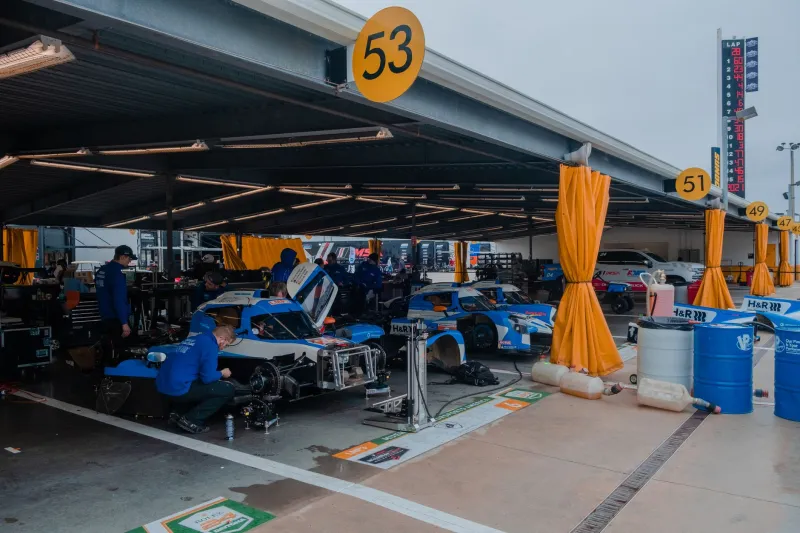
It is 6.45 on a Saturday morning at a Midlands circuit and the gates are already busy. Marshals are unloading cones, a recovery truck is reversing with a beep that carries across the empty paddock, and somewhere in a Portakabin a kettle is being asked to do heroic things. The person who will ultimately decide whether the meeting runs, stops or is abandoned is not wearing a team hoodie or carrying a tyre gauge. They are in a high-vis jacket, holding a clipboard and a radio, and they are reading the weather forecast with the expression of someone who has been here before.
The clerk of the course is the quiet centre of a club race meeting. They are licensed by Motorsport UK, they are almost always volunteers, and they carry the sort of authority that only becomes visible when something goes wrong. On a good day nobody notices them. On a difficult day everyone knows exactly who they are.
The licence behind the lanyard
Nobody walks into the job from the spectator bank. Clerks usually come up through the sport’s volunteer structures — marshal, observer, steward, incident officer — and the training is formal. There are seminars, written assessments and a period of shadowing an experienced clerk before a licence is signed off. Grades exist for a reason: a club meeting at a tight airfield circuit is a different proposition from a national event with a packed timetable and a paddock full of expectations.
The word “volunteer” matters. Clerks are not paid a salary for the weekend. Expenses may be covered, and a bacon roll usually appears at some point, but the motivation is not financial. It is the same instinct that keeps marshals standing in the rain: the sport needs people to say yes.
Before the first engine
The clerk’s day starts long before the first practice session. There is a track walk to check kerbs, barriers, oil patches and recovery routes. There are briefings with the chief marshal, the observers and the medical team. The sound limit gets a mention, because it always does. The forecast gets checked again. The timetable is examined for clashes, gaps and the sort of optimistic scheduling that looks fine on paper and chaotic by 11am.
Sign-on is where the paddock meets the rulebook. Licences are checked, novices are briefed, and the clerk sets the tone for the meeting. A calm briefing can settle a nervous first-timer. A vague one can cause problems later. By the time the first cars are queued in the assembly area, the clerk has already made dozens of small decisions that nobody will ever notice.
Decisions that arrive all at once
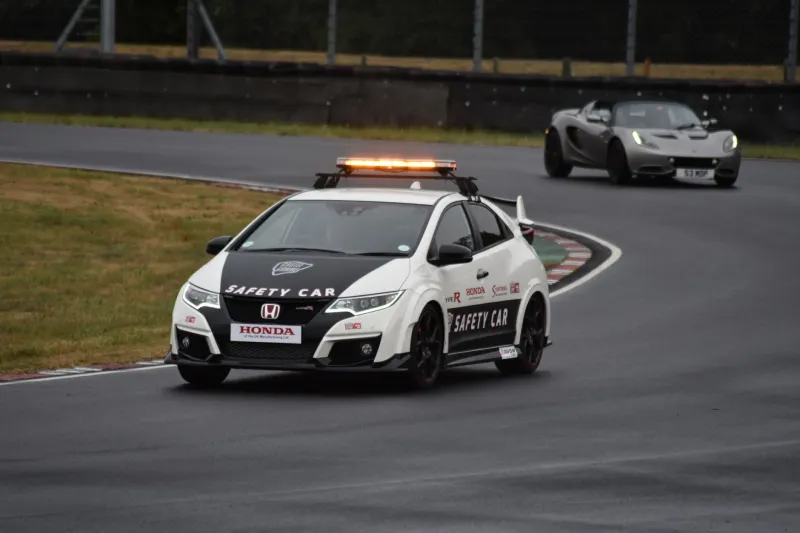
Then the engines start and the job changes pace. A radio call comes in from a post: a car has gone off at a fast corner, there is oil on the racing line, and the recovery vehicle is already moving. The clerk has to decide whether to deploy a safety car, throw a red flag or let the marshals work under local yellows. The rulebook is thick, but the race is live. There is no pause button.
Black flags are another routine part of the job that can reshape a competitor’s weekend. A car might be flagged for a mechanical problem, a loose panel or driving standards that have crossed a line. The clerk does not make that call alone — observers and stewards feed in information — but the final decision lands on their desk. They have to be consistent, explainable and quick. Drivers who feel hard done by will usually say so, and the clerk has to absorb that without turning a race meeting into a debate club.
The quiet pressure is real. A red flag can end someone’s race. A black flag can cost a championship. A decision to abandon a meeting because of fog or a barrier repair can empty a paddock in an hour. Clerks know that their calls will be discussed in vans, on forums and occasionally on social media. The good ones develop a thick skin and a clear paper trail.
The paperwork nobody sees
The race may finish, but the clerk’s weekend does not. Incident reports have to be written, statements collected and judicial matters dealt with. If a competitor appeals, the clerk may find themselves explaining their reasoning to a panel. The paperwork is not glamorous, but it is the mechanism that keeps club racing fair and insured. A decision that cannot be explained on paper is a decision that will not survive scrutiny.
That is where the diplomacy comes in. The clerk is not there to win a popularity contest. They are there to apply the regulations consistently, protect the people standing on the bank and keep the meeting moving. Most competitors understand that, even when they disagree with the outcome. The ones who do not tend to learn that the clerk’s decision is not a suggestion.
Why anyone does it
Club racing has an ageing volunteer base, and clerks are part of that picture. Recruitment is not easy. The job asks for long days, early starts and the willingness to be blamed for things that are often nobody’s fault. But it also offers a view of the sport that money cannot buy. You see the whole meeting, from the first track walk to the last signature. You learn how the rules actually work. You get to keep people safe and send them home with a story.
At the end of the day, the paddock empties, the barriers are packed away and the clerk signs off the meeting. If it has gone well, nobody will remember their name. That is the point. The best clerk of the course is the one you never have to think about — until the moment you really do.