The Paddock Current Account: Club Racing's Informal Economy of Spanners and Favours
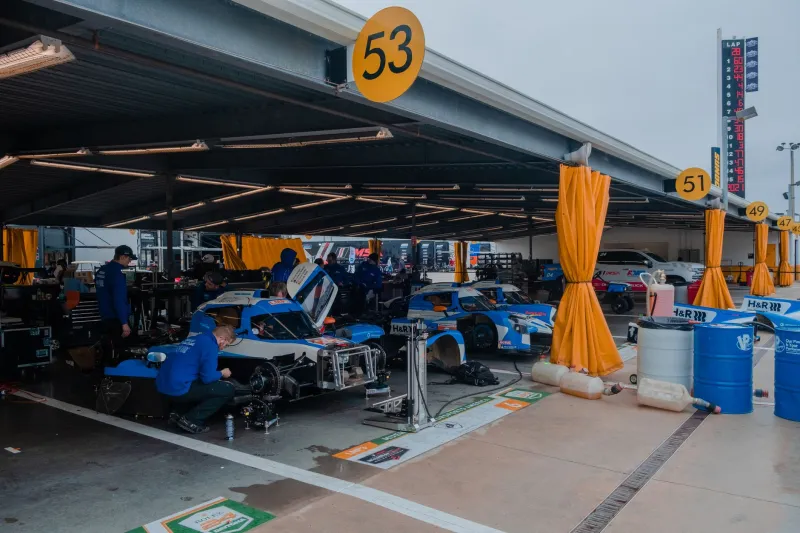
At 7.42 on a damp Sunday morning at Cadwell Park, a starter motor makes the sound of a kettle giving up. The car is due in assembly in eighteen minutes. The nearest motor factor is a round trip away, the kettle in the awning is still lukewarm, and the owner is staring into the engine bay as if eye contact might fix it. Within ten minutes, three people have offered jump leads, one has produced a starter motor of uncertain provenance, and someone else has gone to find the bloke with the big box of terminals. No money changes hands. Nobody asks for a receipt. This is the paddock current account, and it is one of the reasons club racing still works.
A currency made of cable ties and trust
The informal economy of a UK club paddock is not barter, exactly. It is closer to a running tab kept in memory and repaid in biscuits, labour and the loan of a generator when someone else's battery is flat. Tools move between awnings like library books, except the librarian is a retired engineer from Donington who knows exactly who has his 36mm socket and why it matters. Cable ties, gaffer tape, brake cleaner and zip-lock bags of random fasteners circulate with the same quiet logic. Nobody invoices anybody. The debt is social, not financial, and it is usually settled before the end of the season.
The etiquette is simple but strict. You ask before you rummage. You do not help yourself to the tidy tool chest just because the lid is open. You return what you borrowed in at least the condition you found it, ideally cleaner, and you do not put a torque wrench back on the floor of a trailer where it can be kicked into the gravel. Consumables are a different matter. A handful of cable ties is a gift. A whole roll of race tape is a loan. Brake fluid, jubilee clips and spare wheel nuts sit somewhere in between, and the experienced paddock borrower learns to offer replacement before the lender has to ask.
The people who become the parts department
Every paddock has at least one. The racer with a trailer that looks like a rummage sale but contains the exact hose clip for a 1990s Formula Ford. The mechanic who carries a box of obsolete Lucas connectors because he once lost a weekend to a failed one. The quiet person in the next awning who says nothing for two hours and then produces a length of fuel hose, a flare nut spanner and a useful opinion about ignition timing. They are not running a shop. They are running a hobby, and solving a problem is part of the pleasure.
The trick for newcomers is not to treat them like a shop. Do not march over and announce that you need a part. Ask whether they might have one, accept no gracefully, and do not make them responsible for your weekend. If they say yes, you have just been handed time as well as metal. The return on that loan is not cash. It is a thank-you that sounds like it means it, an offer to help when their car is on stands, and a willingness to remember their name when they next need a favour.
When the motor factor is shut and the clock is running
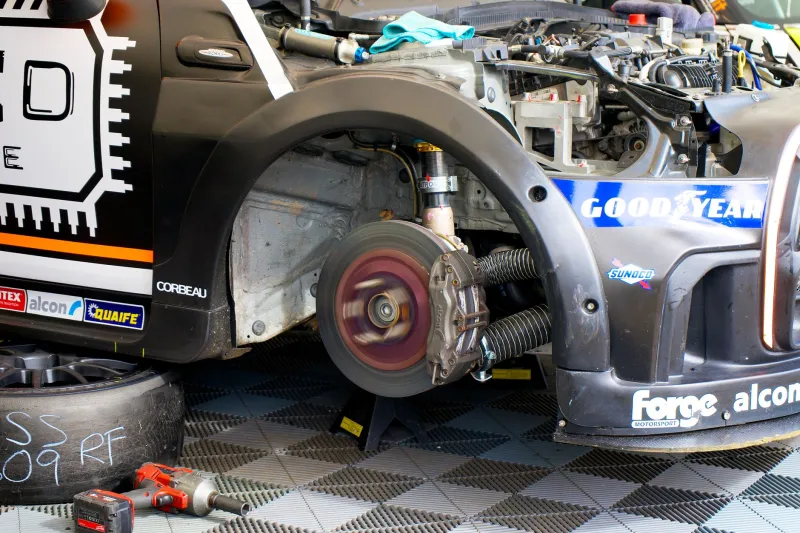
Club racing is full of small emergencies that are only expensive if you insist on solving them alone. A dead battery before qualifying. A missing wheel nut five minutes before the session. A brake caliper that will not bleed, a throttle cable that has frayed at exactly the wrong moment, or a scrutineer who has found a loose battery clamp. The paddock cannot fix everything, and it should not try. Safety-critical parts deserve proper scrutiny, and nobody should be borrowing a used harness or a helmet with an unknown history just to make a grid. But the ordinary, annoying, weekend-ending failures are exactly where the lending library earns its keep.
There is a practical limit to the goodwill. The person who borrows once and returns the favour is a member of the community. The person who borrows every weekend and never replaces a consumable is running an overdraft. Paddocks are friendly, but they are not forgetful. The racer who always needs a jump lead and never offers one develops a reputation faster than a car develops a misfire. The current account works because most people pay in.
The etiquette is the receipt
If there were a laminated card for paddock borrowing, it would say a few blunt things. Ask first. Return promptly. Replace what you use. Own what you break. Do not lend someone else's tool without asking. Do not disappear with the generator. And if you cannot replace something, say so before the owner has to work it out for themselves. Most lenders are reasonable. What they dislike is silence.
Newcomers do not need a fully stocked trailer to join in. A box of cable ties, a roll of gaffer tape, a spare jerry can and a willingness to make tea will get you further than a credit card at the circuit shop. The paddock notices effort. It notices when someone helps pack up in the rain, when someone holds a torch, and when someone returns a spanner with a biscuit on top. Those small deposits matter more than the odd big withdrawal.
By the end of the day at Cadwell, the starter motor has been returned, the jump leads are coiled, and the owner of the car is standing in the awning with a brew and a slightly embarrassed expression. He has learned something about club racing that no entry form explains. The paddock is not just a place to park. It is a lending library with engines, and the only membership fee is remembering to put things back.